Abstract
Adolescent pregnancy remains a significant public health concern in Mexico and is associated with limited health literacy, reduced autonomy, and increased obstetric risk. The World Health Organization (WHO) defines adolescents as individuals between 10 and 19 years of age. The participants enrolled in this study were primigravid adolescents aged 14–19 years. The objective of this study was to evaluate the impact of a structured prenatal pedagogy program on prenatal knowledge, satisfaction with childbirth, authority behaviors, and obstetric clinical outcomes among adolescent primigravid women. A quasi-experimental design was conducted from January to July 2025 at a secondary-level public hospital in Mexico City with 94 participants, divided into an intervention group that received a six-session prenatal pedagogy program and a control group that received standard prenatal care. Prenatal knowledge was measured using a validated 15-item questionnaire, childbirth satisfaction was assessed with the Mackey Childbirth Satisfaction Rating Scale, authority behaviors were evaluated through structured observation, and obstetric clinical outcomes were extracted from medical records. Data distribution was examined using the Shapiro–Wilk test, and intergroup comparisons were performed with Mann–Whitney U and Chi-square tests. The intervention group demonstrated a significant improvement in prenatal knowledge compared with the control group, as well as higher levels of childbirth satisfaction, with a greater proportion reporting very high satisfaction. Authority behaviors such as active participation and decision-making increased among those who received the program. Additionally, fewer adverse obstetric events, including preterm birth and low birth weight, were observed in the intervention group. The findings suggest that structured prenatal pedagogy enhances health literacy, promotes empowerment, and contributes to more positive childbirth experiences among adolescent mothers, while also reducing risks associated with obstetric complications. Integrating such programs into routine prenatal care may strengthen quality of care and support adolescent mothers in achieving safer and more satisfying childbirth experiences.
|
Published in
|
World Journal of Public Health (Volume 11, Issue 1)
|
|
DOI
|
10.11648/j.wjph.20261101.19
|
|
Page(s)
|
72-77 |
|
Creative Commons
|

This is an Open Access article, distributed under the terms of the Creative Commons Attribution 4.0 International License (http://creativecommons.org/licenses/by/4.0/), which permits unrestricted use, distribution and reproduction in any medium or format, provided the original work is properly cited.
|
|
Copyright
|
Copyright © The Author(s), 2026. Published by Science Publishing Group
|
Keywords
Prenatal Education, Adolescent Pregnancy, Birth Satisfaction, Maternal Empowerment, Patient-centered Care
1. Introduction
Adolescent pregnancy continues to be a significant public health concern worldwide, particularly in low- and middle-income countries, where it is associated with elevated maternal morbidity, reduced autonomy, and limited access to high-quality prenatal care
. In Mexico, adolescent mothers represent a vulnerable population due to socioeconomic constraints, fragmented access to health services, and limited exposure to health education programs
. These conditions negatively influence maternal knowledge, decision-making, satisfaction with childbirth, and clinical outcomes for both mothers and newborns
| [3] | McFadden A., Gavine A., Renfrew M., Wade A., Buchanan P., Taylor J. Educational interventions for adolescent pregnancy: a systematic review. BMC Pregnancy and Childbirth. 2018; 18: 216. https://doi.org/10.1186/s12884-018-1822-9 |
[3]
. Recent global analyses continue to demonstrate that adolescent pregnancy is associated with increased risks of preterm birth, low birth weight, and adverse neonatal outcomes, particularly in low- and middle-income settings
.
Prenatal education has emerged as an effective strategy to improve maternal health literacy and prepare women for childbirth. Evidence indicates that structured prenatal education enhances understanding of labor physiology, reduces anxiety, fosters self-efficacy, and improves overall satisfaction with childbirth experiences
. Programs designed specifically for adolescents have demonstrated potential benefits, although research remains limited and inconsistent across regions
. Furthermore, contemporary models such as CenteringPregnancy emphasize group learning, empowerment, and collaborative care, showing improvements in maternal satisfaction and perinatal outcomes
. Updated systematic reviews have reinforced the effectiveness of group prenatal care models in improving perinatal outcomes and maternal satisfaction, particularly among socially vulnerable populations
| [13] | Carter E., Temming L., Akin J., et al. Group prenatal care compared with traditional prenatal care: updated systematic review. Obstetrics & Gynecology. 2023; 141(2): 345–356.
https://doi.org/10.1097/AOG.0000000000005054 |
| [14] | Ickovics J., Kershaw T., Westdahl C., et al. Long-term impact of group prenatal care on birth outcomes. American Journal of Public Health. 2022; 112(6): 873–880.
https://doi.org/10.2105/AJPH.2021.306719 |
[13, 14]
. Despite these advances, few studies in Latin America have examined pedagogical approaches that combine participatory learning, empowerment, and adolescent-centered communication within prenatal care.
Authority behaviors—defined as the capacity of individuals to participate actively in decision-making, communicate needs, and exercise autonomy—represent a critical dimension of respectful maternity care. When adolescents receive insufficient information or are excluded from clinical decisions, satisfaction decreases, and risks of obstetric complications may increase
| [8] | Balkus J., Crites L., Kragelund Nielsen K., et al. Group prenatal care and perinatal outcomes: a systematic review. American Journal of Obstetrics & Gynecology. 2022; 226(3): 364–376.
https://doi.org/10.1016/j.ajog.2021.12.017 |
| [9] | Gruber K., Cupito S., Dobson C. Impact of CenteringPregnancy on maternal stress and perinatal outcomes. Journal of Obstetric, Gynecologic & Neonatal Nursing. 2013; 42(1): 81–90. https://doi.org/10.1111/j.1552-6909.2012.01426.x |
[8, 9]
. The World Health Organization underscores the importance of strengthening patient-centered prenatal care models that promote empowerment, informed consent, and shared decision-making
| [10] | Bohren M., Vogel J., Hunter E., et al. The mistreatment of women during childbirth in health facilities: a mixed-methods systematic review. PLoS Medicine. 2015; 12(6): e1001847.
https://doi.org/10.1371/journal.pmed.1001847 |
[10]
.
Given the scarcity of evidence on educational interventions tailored for adolescent mothers in Mexico, this study aimed to evaluate the impact of a structured prenatal pedagogy program on prenatal knowledge, satisfaction during childbirth, authority behaviors, and obstetric clinical outcomes among adolescent primigravidae at a secondary-level public hospital in Mexico City. The findings of this study revealed that the intervention significantly improved maternal knowledge, satisfaction, empowerment behaviors, and reduced adverse obstetric events, underscoring the potential value of integrating structured prenatal pedagogy into routine adolescent prenatal care.
2. Materials and Methods
2.1. Study Design and Setting
This quasi-experimental study was conducted from January to July 2025 at a secondary-level public hospital in Mexico City, Mexico. The study was designed to evaluate the impact of a structured prenatal pedagogy program on adolescent mothers. A comparison was made between an intervention group receiving the educational program and a control group receiving standard prenatal care. The methodological framework was constructed to ensure transparency and replicability, in accordance with international research standards.
2.2. Participants
A total of 94 primigravid adolescents aged 14–19 years were recruited consecutively from the prenatal care clinic. Participants were allocated into two groups:
1) Intervention group (n = 47): Received the prenatal pedagogy program
2) Control group (n = 47): Received standard prenatal care
Inclusion criteria:
1) Primigravidae aged 14–19 years
2) Singleton gestation
3) Gestational age 20–36 weeks at enrollment
4) Ability to provide informed assent and guardian consent where applicable
Exclusion criteria:
1) High-risk pregnancy requiring specialized care
2) Cognitive or language barriers preventing program participation
3) Transfer to external facilities before delivery
4) Sampling was based on feasibility and the adolescent patient volume during the study period
2.3. Prenatal Pedagogy Intervention
The intervention consisted of a structured six-session prenatal pedagogy program developed by a multidisciplinary team including obstetricians, nurses, and clinical educators. Each session lasted 90 minutes and was delivered in small groups (6–10 participants). The curriculum emphasized participatory learning, interactive discussion, and adolescent-centered communication.
Session content included:
1) Pregnancy anatomy and physiology
2) Stages of labor and warning signs
3) Pain management strategies and relaxation techniques
4) Birth preparedness and maternal rights
5) Immediate newborn care and breastfeeding
6) Emotional regulation, autonomy, and communication skills
Consistency in program delivery was ensured through standardized materials and facilitator training.
2.4. Measurement Instruments
2.4.1. Prenatal Knowledge Questionnaire
A validated 15-item questionnaire assessed cognitive understanding of pregnancy, labor, and postpartum care. Items were scored on a 0–20 scale, with higher scores indicating greater knowledge. The tool demonstrated internal consistency with a Cronbach’s alpha of 0.81.
2.4.2. Childbirth Satisfaction
The Mackey Childbirth Satisfaction Rating Scale was administered post-delivery to evaluate satisfaction across domains including personal capacity, provider communication, and overall labor experience.
2.4.3. Authority Behaviors Assessment
Authority behaviors were defined as observable actions related to autonomy, participation in decision-making, and communication with healthcare staff. Behaviors were documented by trained observers using a structured checklist and classified as passive, moderately active, or highly active.
2.4.4. Obstetric Clinical Outcomes
Clinical data were extracted retrospectively from medical records. Variables included:
1) Preterm birth (<37 weeks)
2) Low birth weight (<2,500 g)
3) Mode of delivery
4) Intrapartum complications
2.5. Data Collection Procedures
Data were collected at three time points:
1) Baseline: Prenatal knowledge pre-test
2) Post-intervention (36–40 weeks): Knowledge re-test
3) Postpartum: Birth satisfaction, authority behaviors, and obstetric outcomes
Data collectors underwent standardized training to ensure uniformity and accuracy in measurement.
2.6. Statistical Analysis
Descriptive and inferential analyses were conducted using IBM SPSS Statistics version 26. Normality was assessed using the Shapiro–Wilk test. Due to non-normal distributions, nonparametric tests were used:
Mann–Whitney U test for quantitative variables
Chi-square test for categorical variables
Significance was established at p < 0.05. Missing data (<5%) were addressed through pairwise deletion.
2.7. Ethical Considerations
The study received approval from the Institutional Ethics Committee of a secondary-level public hospital in Mexico City. All procedures adhered to the Declaration of Helsinki. Informed assent was obtained from all adolescent participants, along with guardian consent when required. Confidentiality and data protection measures were strictly maintained.
3. Results
3.1. Participant Characteristics
A total of 94 adolescent primigravidae completed the study, with 47 participants in the intervention group and 47 in the control group. The mean age of participants was 16.9 ± 0.8 years, with no statistically significant differences between groups in sociodemographic characteristics, educational attainment, marital status, or gestational age at enrollment (p > 0.05). Baseline prenatal knowledge scores did not differ significantly between groups.
3.2. Prenatal Knowledge
Following the intervention, a significant increase in prenatal knowledge scores was observed in the intervention group, while the control group showed minimal change. Results of the Mann–Whitney U test demonstrated a statistically significant difference between post-test scores of both groups (p < 0.001).
Table 1. Prenatal Knowledge Scores Before and After the Intervention.
Group | Pre-test Mean ± SD | Post-test Mean ± SD | p-value |
Intervention (n = 47) | 10.5 ± 1.8 | 17.3 ± 1.9 | <0.001 |
Control (n = 47) | 10.4 ± 1.9 | 11.1 ± 2.0 | 0.21 |
3.3. Birth Satisfaction
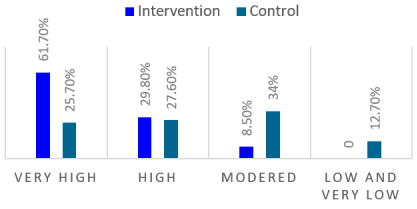
Childbirth satisfaction levels differed significantly between groups. A higher proportion of participants in the intervention group reported very high satisfaction compared with the control group. Chi-square testing confirmed this difference as statistically significant (χ² = 12.34, p = 0.001).
Very high satisfaction: 61.7% (intervention) vs. 25.7% (control)
Moderate satisfaction: 8.5% vs. 34.0%
Low satisfaction: 0% vs. 12.7%
Figure 1. Distribution of Childbirth Satisfaction Levels in Both Groups.
3.4. Authority Behaviors
Authority behaviors, defined as active participation, questioning, and decision-making during labor, were more frequently exhibited by participants in the intervention group. Observational assessments showed:
1) Highly active behaviors: 53.2% (intervention) vs. 19.1% (control)
2) Moderately active behaviors: 36.2% vs. 44.7%
3) Passive behaviors: 10.6% vs. 36.2%
Chi-square analysis indicated significant differences between groups (χ² = 14.56, p = 0.002).
3.5. Obstetric Clinical Outcomes
Analysis of obstetric events revealed fewer adverse outcomes in the intervention group compared with the control group. Significant differences were found in the incidence of preterm birth and low birth weight (p = 0.03).
Table 2. Obstetric Clinical Outcomes in the Intervention and Control Groups.
Outcome | Intervention (n = 47) | Control (n = 47) | p-value |
Preterm birth (<37 weeks) | 3 (6.4%) | 9 (19.1%) | 0.03 |
Low birth weight (<2,500 g) | 4 (8.5%) | 11 (23.4%) | 0.03 |
Vaginal delivery | 41 (87.2%) | 39 (83.0%) | 0.58 |
Cesarean delivery | 6 (12.8%) | 8 (17.0%) | 0.54 |
Intrapartum complications | 2 (4.3%) | 7 (14.9%) | 0.08 |
Outcome | Intervention (n = 47) | Control (n = 47) | p-value |
No severe maternal complications or neonatal deaths were recorded in either group.
4. Discussion
The findings of this study show that a structured prenatal pedagogy program can substantially improve cognitive, experiential, and behavioral outcomes among adolescent mothers. These results are consistent with global evidence demonstrating that antenatal education enhances maternal health literacy, emotional preparedness, and autonomy during childbirth
. The significant increase in prenatal knowledge among the intervention group suggests that adolescents benefit greatly from structured and developmentally tailored learning environments. Similar studies have reported that participatory and learner-centered educational approaches lead to superior knowledge acquisition compared with traditional didactic formats
. This alignment reinforces the growing consensus that interactive prenatal education is essential for promoting informed maternal decision-making.
Beyond cognitive gains, the improvement in childbirth satisfaction observed in the intervention group illustrates the multidimensional impact of prenatal pedagogy. Satisfaction during labor and birth is shaped not only by clinical outcomes but also by communication quality, perceived control, and the ability to actively participate in care decisions. Studies conducted in adolescent populations have consistently shown that feelings of empowerment, clarity of expectations, and supportive interactions with providers positively influence the childbirth experience
. The present findings are consistent with such evidence, particularly in the increased frequency of authority behaviors—defined as assertive participation, questioning, and informed decision-making—among adolescents who received the intervention. Previous research has identified authority behaviors as central to respectful maternity care frameworks and associated with better maternal emotional outcomes
.
The observed reduction in preterm birth (6.4% vs. 19.1%) and low birth weight (8.5% vs. 23.4%) among participants exposed to the educational program, although modest in absolute numbers, represents clinically meaningful differences. The relative reduction in preterm birth exceeded 60%, suggesting a potentially important public health impact in high-risk adolescent populations. These improvements may be partially explained by enhanced adherence to prenatal recommendations, earlier recognition of warning signs, improved stress regulation, and stronger engagement with healthcare providers. Increased knowledge and participatory behaviors may have facilitated timely care-seeking when symptoms emerged, thereby reducing preventable obstetric complications. Although causality cannot be definitively established due to the quasi-experimental design, the direction and magnitude of these findings align with contemporary evidence indicating that structured, empowerment-based prenatal education can positively influence both behavioral and physiological pathways associated with adverse perinatal outcomes. Emerging evidence suggests that maternal stress reduction and improved psychosocial support during pregnancy are significantly associated with decreased risk of preterm birth
.
An important aspect of this study is its focus on adolescents, who face unique barriers to care—including limited autonomy, stigma, and lower health literacy—compared with adult pregnant women. The literature documents that adolescents often report lower satisfaction with maternity care, diminished communication with providers, and poorer obstetric outcomes
| [10] | Bohren M., Vogel J., Hunter E., et al. The mistreatment of women during childbirth in health facilities: a mixed-methods systematic review. PLoS Medicine. 2015; 12(6): e1001847.
https://doi.org/10.1371/journal.pmed.1001847 |
[10]
. The results of this study, therefore, demonstrate the value of an intervention designed intentionally for this population. The incorporation of emotional regulation strategies, clarification of rights, and communication skill-building may have strengthened the adolescents’ sense of efficacy and navigational capacity within the maternity care environment.
The strengths of this study include its comprehensive evaluation framework, which integrates cognitive, experiential, behavioral, and clinical dimensions. Few studies in Latin America have assessed prenatal education using such a multidimensional approach. Additionally, the use of validated measurement tools and standardized observation protocols enhances the credibility and replicability of the findings.
However, several limitations must be acknowledged. The quasi-experimental design introduces the possibility of unmeasured confounding variables, such as differences in social support, anxiety levels, or external educational exposure. The study was conducted in a single public hospital, limiting generalizability to other health systems or regions. Moreover, authority behaviors were documented by observers, which, despite standardized training, may be subject to observer bias. These limitations underscore the need for randomized controlled trials and multi-site studies to strengthen causal inferences and assess scalability. International public health agencies have emphasized the need to strengthen adolescent-centered reproductive health services as a strategy to reduce preventable maternal and neonatal morbidity
| [16] | World Health Organization. WHO recommendations on adolescent sexual and reproductive health. Geneva: WHO; 2023. |
| [17] | United Nations Population Fund. Adolescent pregnancy and public health implications. UNFPA; 2024. |
[16, 17]
.
Future research should examine long-term effects of prenatal pedagogy, including postpartum adaptation, breastfeeding practices, maternal–infant bonding, and mental health outcomes. Studies exploring digital or hybrid modes of delivering prenatal pedagogy may also broaden accessibility for adolescents facing socioeconomic or geographic barriers. Additionally, qualitative research could provide deeper insight into adolescents’ subjective experiences of empowerment and autonomy during childbirth.
5. Conclusions
This study found that a structured prenatal pedagogy program substantially improved prenatal knowledge, childbirth satisfaction, and authority behaviors among adolescent primigravidae. The intervention also contributed to more favorable obstetric outcomes, underscoring the importance of integrating educational and empowerment-based strategies into prenatal care for this population. These findings demonstrate that adolescent-oriented pedagogical approaches can strengthen maternal readiness, enhance the childbirth experience, and support safer clinical trajectories. As adolescent pregnancy remains a persistent public health challenge, implementing structured prenatal pedagogy within routine clinical practice may represent an effective strategy to improve quality of care and promote more equitable maternal health outcomes. Continued research is needed to evaluate long-term effects and assess the feasibility of scaling this model across diverse healthcare settings.
Abbreviations
SPSS | Statistical Package for the Social Sciences |
WHO | World Health Organization |
MWU | Mann–Whitney U Test |
SW | Shapiro–Wilk Test |
CHI² | Chi-Square Test |
LBW | Low Birth Weight |
PTB | Preterm Birth |
SD | Standard Deviation |
Author Contributions
Narda Castellanos Joo: Writing – original draft, Methodology, Data curation, Investigation, Formal Analysis
Arturo Gonzalez-Ledesma: Writing – review & editing, Supervision
Karla Patricia Pacheco Alvarado: Writing – review & editing, Validation
Data Availability Statement
The data is available from the corresponding author upon reasonable request.
Conflicts of Interest
The authors declare no conflicts of interest.
References
| [1] |
World Health Organization. Adolescent pregnancy fact sheet. Available from:
https://www.who.int/news-room/fact-sheets/detail/adolescent-pregnancy
(accessed 20 October 2025).
|
| [2] |
Lumbiganon P., Laopaiboon M., Gülmezoglu A., et al. Antenatal care and maternal outcomes in developing countries. The Lancet. 2010; 375(9712): 832–845.
https://doi.org/10.1016/S0140-6736(09)62147-2
|
| [3] |
McFadden A., Gavine A., Renfrew M., Wade A., Buchanan P., Taylor J. Educational interventions for adolescent pregnancy: a systematic review. BMC Pregnancy and Childbirth. 2018; 18: 216.
https://doi.org/10.1186/s12884-018-1822-9
|
| [4] |
Nolan M., Smith J. Women’s experiences of antenatal education: a qualitative study. Midwifery. 2010; 26(2): 157–164.
https://doi.org/10.1016/j.midw.2008.04.003
|
| [5] |
Kuo S., Lin K., Li C. The effect of prenatal education on maternal self-efficacy and childbirth outcomes. Journal of Clinical Nursing. 2019; 28(9–10): 1700–1710.
https://doi.org/10.1111/jocn.14789
|
| [6] |
Mangeli M., Rayyani M., Cheraghi A., Tirgari B. Adolescent mothers’ experiences of pregnancy. Journal of Pediatric and Adolescent Gynecology. 2017; 30(4): 493–501.
https://doi.org/10.1016/j.jpag.2017.02.011
|
| [7] |
Rising S., Kennedy H., Klima C. Redesigning prenatal care through CenteringPregnancy. Journal of Midwifery & Women’s Health. 2004; 49(5): 398–404.
https://doi.org/10.1016/j.jmwh.2004.05.009
|
| [8] |
Balkus J., Crites L., Kragelund Nielsen K., et al. Group prenatal care and perinatal outcomes: a systematic review. American Journal of Obstetrics & Gynecology. 2022; 226(3): 364–376.
https://doi.org/10.1016/j.ajog.2021.12.017
|
| [9] |
Gruber K., Cupito S., Dobson C. Impact of CenteringPregnancy on maternal stress and perinatal outcomes. Journal of Obstetric, Gynecologic & Neonatal Nursing. 2013; 42(1): 81–90.
https://doi.org/10.1111/j.1552-6909.2012.01426.x
|
| [10] |
Bohren M., Vogel J., Hunter E., et al. The mistreatment of women during childbirth in health facilities: a mixed-methods systematic review. PLoS Medicine. 2015; 12(6): e1001847.
https://doi.org/10.1371/journal.pmed.1001847
|
| [11] |
Neal S., Channon A., Chintsanya J. The impact of adolescent pregnancy on maternal and neonatal outcomes in low- and middle-income countries. BMJ Global Health. 2022; 7(3): e008807.
https://doi.org/10.1136/bmjgh-2022-008807
|
| [12] |
SmithBattle L. Reducing adolescent pregnancy-related disparities through patient-centered prenatal care. Journal of Adolescent Health. 2023; 72(4): 512–518.
https://doi.org/10.1016/j.jadohealth.2022.11.003
|
| [13] |
Carter E., Temming L., Akin J., et al. Group prenatal care compared with traditional prenatal care: updated systematic review. Obstetrics & Gynecology. 2023; 141(2): 345–356.
https://doi.org/10.1097/AOG.0000000000005054
|
| [14] |
Ickovics J., Kershaw T., Westdahl C., et al. Long-term impact of group prenatal care on birth outcomes. American Journal of Public Health. 2022; 112(6): 873–880.
https://doi.org/10.2105/AJPH.2021.306719
|
| [15] |
Racine N., Hetherington E., McDonald S., et al. Maternal stress and preterm birth: updated meta-analysis. Clinical Psychology Review. 2022; 91: 102110.
https://doi.org/10.1016/j.cpr.2021.102110
|
| [16] |
World Health Organization. WHO recommendations on adolescent sexual and reproductive health. Geneva: WHO; 2023.
|
| [17] |
United Nations Population Fund. Adolescent pregnancy and public health implications. UNFPA; 2024.
|
Cite This Article
-
APA Style
Joo, N. C., Gonzalez-Ledesma, A., Alvarado, K. P. P. (2026). Impact of a Prenatal Pedagogy Program Among Adolescent Mothers at a Public Hospital in Mexico City. World Journal of Public Health, 11(1), 72-77. https://doi.org/10.11648/j.wjph.20261101.19
 Copy
|
Copy
|
 Download
ACS Style
Joo, N. C.; Gonzalez-Ledesma, A.; Alvarado, K. P. P. Impact of a Prenatal Pedagogy Program Among Adolescent Mothers at a Public Hospital in Mexico City. World J. Public Health 2026, 11(1), 72-77. doi: 10.11648/j.wjph.20261101.19
Copy
|
Download
AMA Style
Joo NC, Gonzalez-Ledesma A, Alvarado KPP. Impact of a Prenatal Pedagogy Program Among Adolescent Mothers at a Public Hospital in Mexico City. World J Public Health. 2026;11(1):72-77. doi: 10.11648/j.wjph.20261101.19
Copy
|
Download
-
@article{10.11648/j.wjph.20261101.19,
  author = {Narda Castellanos Joo and Arturo Gonzalez-Ledesma and Karla Patricia Pacheco Alvarado},
  title = {Impact of a Prenatal Pedagogy Program Among Adolescent Mothers at a Public Hospital in Mexico City},
  journal = {World Journal of Public Health},
  volume = {11},
  number = {1},
  pages = {72-77},
  doi = {10.11648/j.wjph.20261101.19},
  url = {https://doi.org/10.11648/j.wjph.20261101.19},
  eprint = {https://article.sciencepublishinggroup.com/pdf/10.11648.j.wjph.20261101.19},
  abstract = {Adolescent pregnancy remains a significant public health concern in Mexico and is associated with limited health literacy, reduced autonomy, and increased obstetric risk. The World Health Organization (WHO) defines adolescents as individuals between 10 and 19 years of age. The participants enrolled in this study were primigravid adolescents aged 14–19 years. The objective of this study was to evaluate the impact of a structured prenatal pedagogy program on prenatal knowledge, satisfaction with childbirth, authority behaviors, and obstetric clinical outcomes among adolescent primigravid women. A quasi-experimental design was conducted from January to July 2025 at a secondary-level public hospital in Mexico City with 94 participants, divided into an intervention group that received a six-session prenatal pedagogy program and a control group that received standard prenatal care. Prenatal knowledge was measured using a validated 15-item questionnaire, childbirth satisfaction was assessed with the Mackey Childbirth Satisfaction Rating Scale, authority behaviors were evaluated through structured observation, and obstetric clinical outcomes were extracted from medical records. Data distribution was examined using the Shapiro–Wilk test, and intergroup comparisons were performed with Mann–Whitney U and Chi-square tests. The intervention group demonstrated a significant improvement in prenatal knowledge compared with the control group, as well as higher levels of childbirth satisfaction, with a greater proportion reporting very high satisfaction. Authority behaviors such as active participation and decision-making increased among those who received the program. Additionally, fewer adverse obstetric events, including preterm birth and low birth weight, were observed in the intervention group. The findings suggest that structured prenatal pedagogy enhances health literacy, promotes empowerment, and contributes to more positive childbirth experiences among adolescent mothers, while also reducing risks associated with obstetric complications. Integrating such programs into routine prenatal care may strengthen quality of care and support adolescent mothers in achieving safer and more satisfying childbirth experiences.},
 year = {2026}
}
Copy
|
Download
-
TY  - JOUR
T1  - Impact of a Prenatal Pedagogy Program Among Adolescent Mothers at a Public Hospital in Mexico City
AU  - Narda Castellanos Joo
AU  - Arturo Gonzalez-Ledesma
AU  - Karla Patricia Pacheco Alvarado
Y1  - 2026/03/12
PY  - 2026
N1  - https://doi.org/10.11648/j.wjph.20261101.19
DO  - 10.11648/j.wjph.20261101.19
T2  - World Journal of Public Health
JF  - World Journal of Public Health
JO  - World Journal of Public Health
SP  - 72
EP  - 77
PB  - Science Publishing Group
SN  - 2637-6059
UR  - https://doi.org/10.11648/j.wjph.20261101.19
AB  - Adolescent pregnancy remains a significant public health concern in Mexico and is associated with limited health literacy, reduced autonomy, and increased obstetric risk. The World Health Organization (WHO) defines adolescents as individuals between 10 and 19 years of age. The participants enrolled in this study were primigravid adolescents aged 14–19 years. The objective of this study was to evaluate the impact of a structured prenatal pedagogy program on prenatal knowledge, satisfaction with childbirth, authority behaviors, and obstetric clinical outcomes among adolescent primigravid women. A quasi-experimental design was conducted from January to July 2025 at a secondary-level public hospital in Mexico City with 94 participants, divided into an intervention group that received a six-session prenatal pedagogy program and a control group that received standard prenatal care. Prenatal knowledge was measured using a validated 15-item questionnaire, childbirth satisfaction was assessed with the Mackey Childbirth Satisfaction Rating Scale, authority behaviors were evaluated through structured observation, and obstetric clinical outcomes were extracted from medical records. Data distribution was examined using the Shapiro–Wilk test, and intergroup comparisons were performed with Mann–Whitney U and Chi-square tests. The intervention group demonstrated a significant improvement in prenatal knowledge compared with the control group, as well as higher levels of childbirth satisfaction, with a greater proportion reporting very high satisfaction. Authority behaviors such as active participation and decision-making increased among those who received the program. Additionally, fewer adverse obstetric events, including preterm birth and low birth weight, were observed in the intervention group. The findings suggest that structured prenatal pedagogy enhances health literacy, promotes empowerment, and contributes to more positive childbirth experiences among adolescent mothers, while also reducing risks associated with obstetric complications. Integrating such programs into routine prenatal care may strengthen quality of care and support adolescent mothers in achieving safer and more satisfying childbirth experiences.
VL  - 11
IS  - 1
ER  -
Copy
|
Download





 Share This Article
 Twitter
 Linked In
 Facebook